
Changing Lanes
In Conversation with Ben Wolf

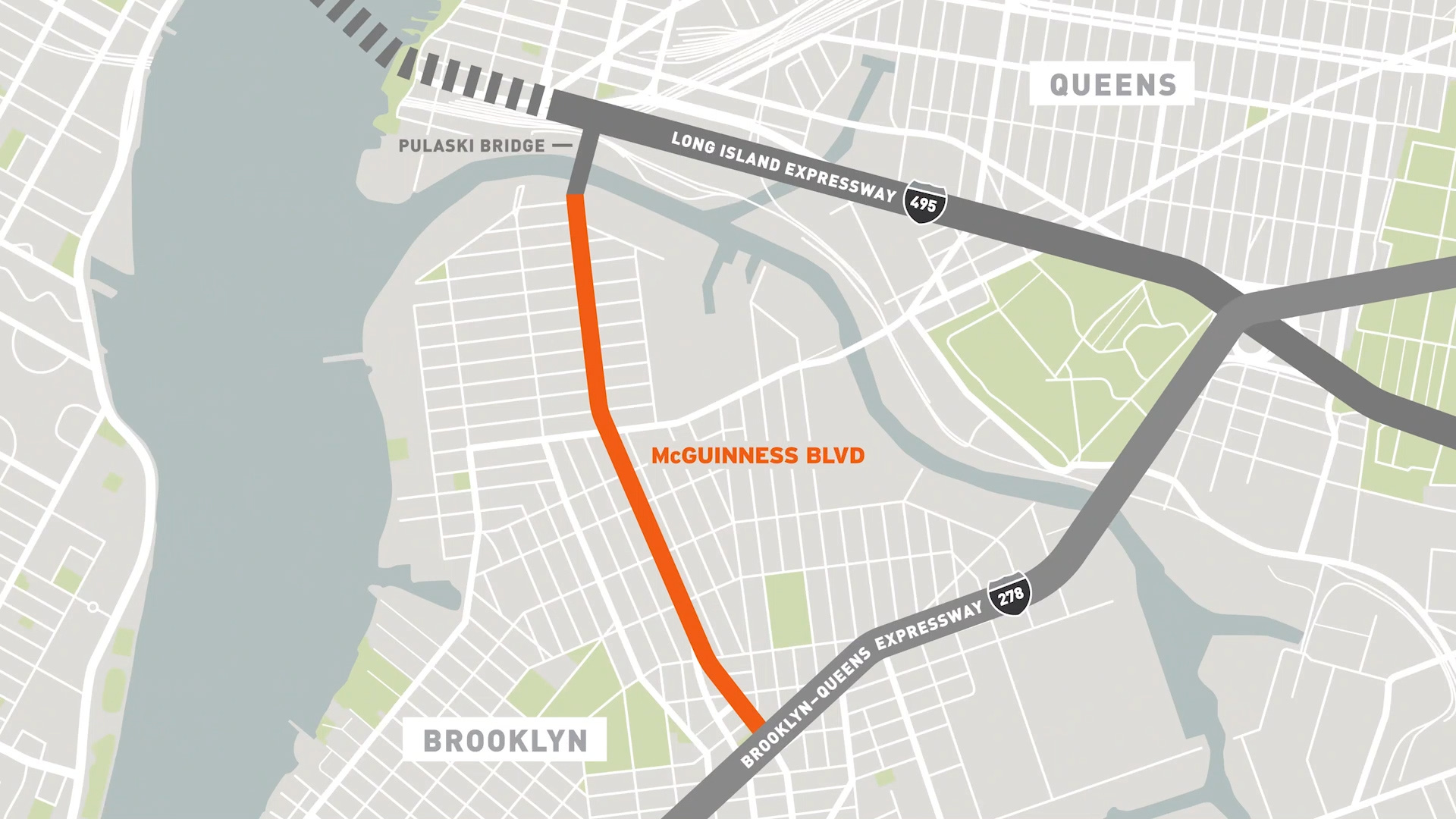
People have a visceral reaction to changes, especially when it’s their local streets. New York has the reputation as a transit accessible city, but there are parts of the city, particularly in formerly industrialized hubs, that feel deadly for pedestrians and cyclists. Changing Lanes looks at the movement to make McGuiness Boulevard, an arterial road connecting two highways that runs straight through the heart of Greenpoint, Brooklyn, into a safer street for all. Seems like a no brainer to make streets safer, especially for a community that has been plagued by devastating injuries and deaths from unnecessary car crashes. But the story that unfolds in the documentary is a stress test for the strength of democracy itself.
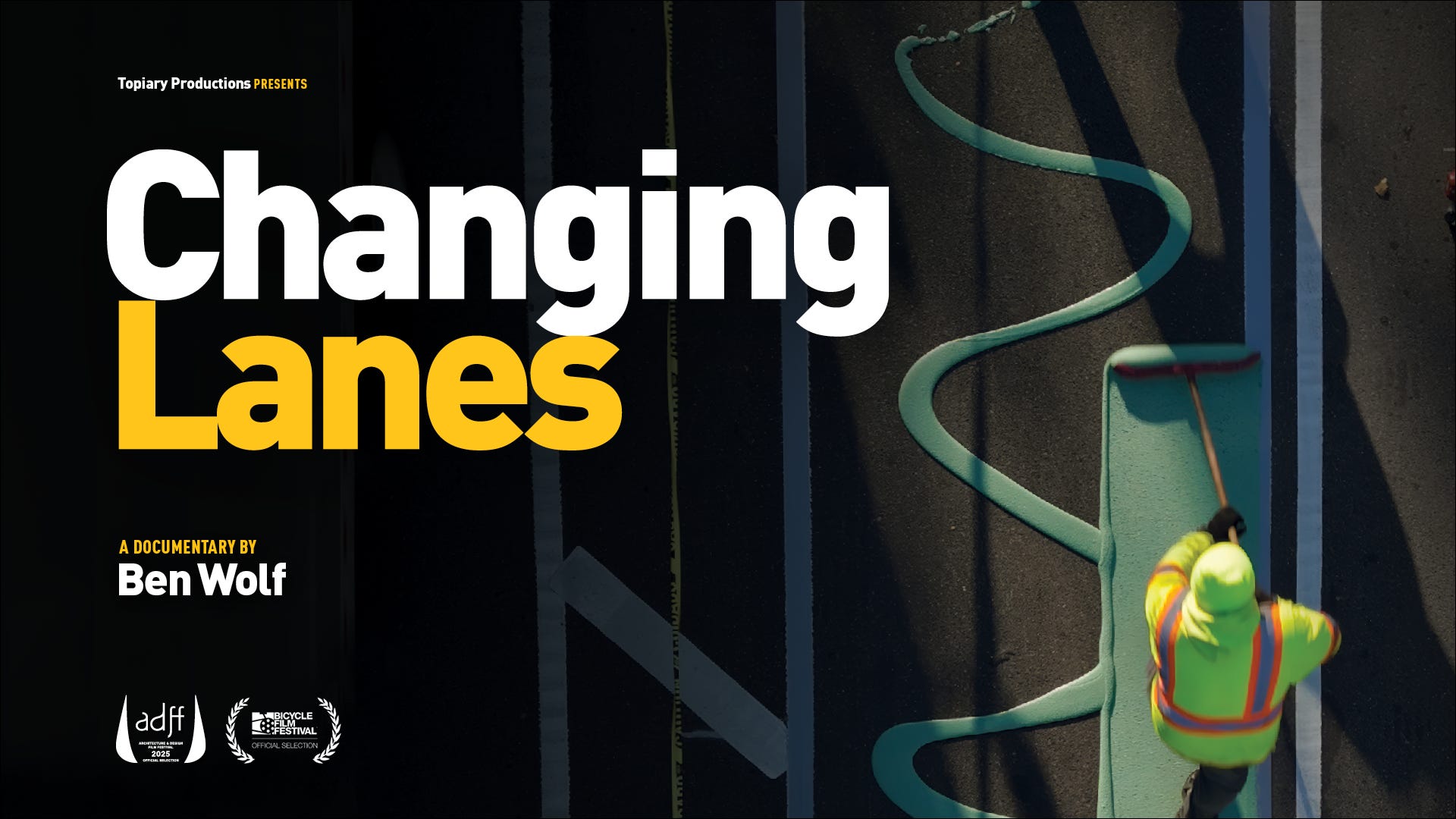
Make sure you check out Changing Lanes at a screening near you. More details can be found at www.changinglanesdoc.com/
Check out my conversation with Ben Wolf, the Director of Changing Lanes, on what makes McGuinness Boulevard a case study for democracy at scale. Our interview has been abridged for clarity and length.
Jen Abrahams: Thanks for taking the time today, Ben. I just wanted to start asking you a bit about your movie Changing Lanes. What made you interested in transport safety in New York?
Ben Wolf: I’m a pedestrian, a subway user, cyclist and driver. I have a particular passion for bicycling. I used to show up at meetings in New York in the late 90s with a helmet and people would be freaked out that I dared to ride a bike in the city. But now it’s gone very mainstream and that’s been exciting.
Abrahams: I was really inspired that you did the production using only equipment that could be moved by bike. What did that look like?
Wolf: It was a challenge I set out for myself, in part because I thought it would be kind of a clever hook for a movie about transportation. Wouldn’t it be interesting to see if you can do it without a car? Normally on film shoots I have a van that I fill up with equipment and drive to the location. The gear has been getting smaller over the years and I thought maybe we’ve crossed the threshold where I can do this by bike.
I also think in documentaries, having a light footprint is important. If you’re going to show up at a demonstration with five people, you’re going to draw a lot of attention [with a crew] versus if you’re just one person with a little camera. I think it’s a lot more discreet, which can be very helpful in a documentary.
Abrahams: Without spoiling the film, I think it’s noteworthy that one of the loudest voices against street safety improvements in Greenpoint, Brooklyn was the owner of a film and television soundstage. That by removing car-centric design you’d be impacting their business operations.
Wolf: One of the main obstacles to changing streets tends to be business interests. Businesses often assume that car traffic equals business, when in fact for retail it’s really foot traffic that drives business. In Greenpoint, on McGuiness Boulevard, the situation is a little different. Many businesses are industrial in nature, and soundstages are kind of more in that industrial category. They’re not serving pedestrians as they walk by.
Abrahams: Do you think that there’s any merit to their argument against calming traffic on McGuinness?
Wolf: They may have had some legitimate concerns, but I think that they were also overblown. So often a fight about a bike lane or a street really isn’t about a bike lane or a street at all. This fight and many similar fights are really more about gentrification. They’re about new people coming into a place and changing it. That often triggers people that are already there, who feel that it’s being taken away from them in some way.
Abrahams: Why do you think it’s so much harder in New York to address car-centric street design than in places in Europe or Latin America?
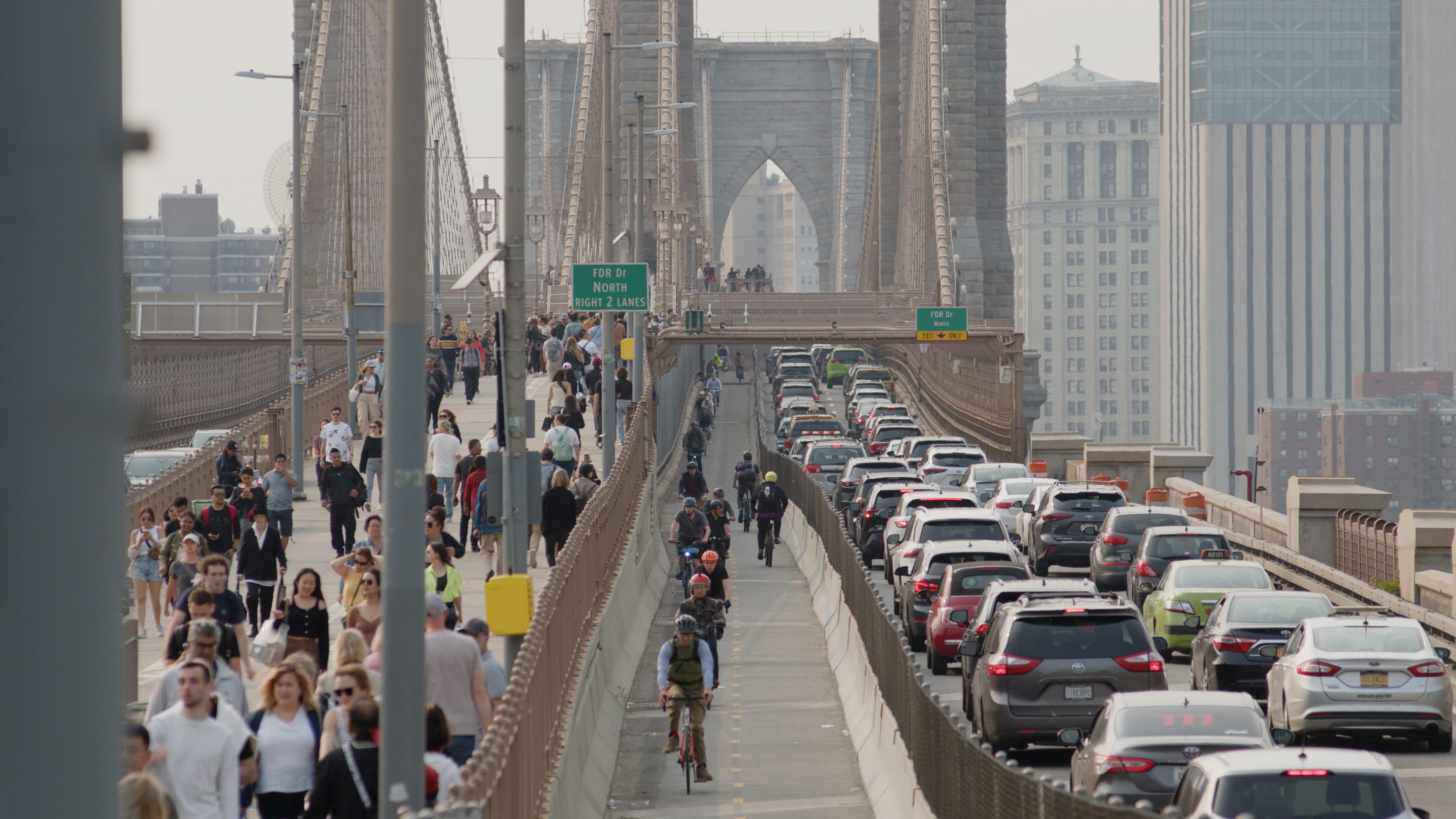
Wolf : There’s a lot of different theories on why that is. I think the countries that have moved the furthest away from the car in their cities tend to be fairly homogeneous countries like Scandinavian countries or Japan. I suspect it’s easier to get a sort of consensus about change in places where people are more similar to each other and can more easily come to agreement. New York is one of the most diverse places in the world. People sometimes have a harder time kind of coming together [here]. And you have politicians that are happy to sort of drive wedges between groups to increase their own power.
People also tend to resist change. That’s probably true everywhere, but I think our politics recently has made it even more extreme. People are just really digging in, and they don’t even want to talk, or they just want to scream at anybody that wants to do anything. They don’t necessarily even understand what the proposed changes are. There’s a reactionary tendency that’s become very strong.
Abrahams: It feels like the redesign of McGuinness Boulevard is a case study or a microcosm of all those issues. The proposed redesign is quite simple. Taking four lanes of fast-moving traffic and reducing it down to two lanes. But once you get into the details of the community response it’s quite complicated.
Wolf: And I would add, as the movie goes into, this kind of change is not unique to McGuiness Boulevard. This has been done already in many places in this city and yet you still get this incredible resistance. I feel like people literally need to just go a couple miles to the next neighborhood and see: how did it play out?
Abrahams: Why do you think there is that disconnect?
Wolf: There’s just a lack of awareness. The reason to make documentaries or a movie like this is to hopefully help move things in a positive direction. I do think that one of the reasons that we don’t see more improvements in the way our streets are laid out is a lack of good information. As Emily Gallagher, a State Assembly person in the film, has a great quote in the film: politics are about feelings, not facts. That’s a big motivation for me to make a film like this because the data isn’t enough. You need to tell a story, you need to make things digestible to people. And I think that’s a thing that a documentary can help do.
Abrahams: Why was there such a visceral reaction to McGuinness Boulevard specifically?
Wolf: In Greenpoint, I wouldn’t underestimate the power of individual personalities. One thing that I’ve learned in making this movie as someone that wasn’t that engaged in local politics is how I assumed that we have good systems and experts making rational choices. The conclusion I’ve come to is that it’s for the most part not functioning that way and it’s much more personality based.
Abrahams: How so?
Wolf: When we have a mayor that’s truly interested in transportation, we make progress. When we don’t, nothing happens. I think that most people on both sides of this debate are reasonable people who have good intentions. I think McGuinness was unique in having a couple bad actors. These bad actors can really muck up the process. We also see that in our national politics. Bad faith arguments are put out there, which to people that aren’t super well informed in these subjects, sound reasonable.
Abrahams: What sort of arguments did you hear against the design of McGuiness Boulevard?
Wolf: You often hear that the traffic is bad now. When you take away those car lanes, it’s going to be at a standstill. It’s going to be an utter disaster. The only problem with that is it’s not true. If you study [transportation], you learn there’s something called induced demand. Usually when you take away lanes, you don’t increase traffic and usually when you add lanes, you don’t decrease traffic. It’s not intuitive.
Abrahams: Yeah, and misinformation spreads easily.
Wolf: People are happy to sort of tell an untruth if it furthers their own personal agenda. There was a lot of that here.
Abrahams: How did the movement make McGuinness Boulevard safer begin?
Wolf: McGuiness Boulevard was created in the 1950s from a small residential two-lane street to a four-lane road. Robert Moses knocked down 500 houses [to build it]. From the very beginning there was resistance. A lot of people were killed on this street. I’ve heard an estimate that as many as a couple hundred people over the decades. Some in cars, some on bikes, some on foot.
The particular story I follow started after a local elementary school teacher was killed in 2021. The PTA was already very organized and engaged because of the pandemic. It was natural for them to feel concerns about walking their kids across the street where people are getting hit. They formed a group of mostly parents called Make McGuinness Safe. They got about 10,000 signatures to support the changes to make the street safer. There was a core group of 20 to 30 people organizing. They had a booth every weekend in the local park where they were explaining the plan and really pushing for it. They were very open [with me].
Abrahams: Did you manage to spend time with those opposed to the changes to McGuinness Boulevard?
Wolf: Those opposed were more suspicious of what I was doing. There was a paranoia that I’m out there to embarrass them. I tried to give them a chance to share with me but they didn’t. The other group called itself Keep McGuinness Moving. While they tried to appear to be a grassroots movement, it was really a couple of business owners behind it. It’s a deliberate strategy to try to appear just as reasonable and just as organic. It is a strategy that bad actors use. It’s very confusing for the average person who’s just trying to figure out what’s the right thing to support.
Abrahams: What do you think that this teaches us about street level democracy? You know, you have these various actors, some that are malicious, or maybe have their own business interests. You have parents that are looking to make their community safer. You have all kinds of political forces at City Hall. How do you square that?
Wolf: Yeah, I mean, those are the big questions. I feel like in a certain way I’m happy for my movie to merely raise them. My takeaway is that activism can work. Sometimes the system seems so broken that it seems totally hopeless. But if you really see a need for something to change and you are willing to get organized, you can make a difference.
Abrahams: Feels like a good note to end it on. How can people check out Changing Lanes?
Wolf: It is still screening just in festivals and colleges at the moment. I keep a list of where it’s screening on the film’s website, www.changinglanesdoc.com
April 16th to 20th, it’s going to have its commercial theatrical release in Los Angeles. Shortly after that it should start streaming on one of the big platforms and will be widely available.
Abrahams: I highly recommend watching Changing Lanes. Really inspiring film.
Wolf: I’ll keep future screenings updated on www.changinglanesdoc.com
. If anybody is in a city or a group that would be interested in hosting a screening, I’m very open to that. They can reach out to me through the website to discuss.
Abrahams: Great, folks should check it out. Thank you for your time today.
Wolf: Thank you
Great conversation- I liked his comment “ People are happy to tell an untruth if it furthers their agenda “ .